2026 Top Smart Downlight Types for Global Buyers?

Choosing the right Smart Downlight in 2026 requires more than comparing brightness and price. Global buyers must assess lighting performance, control systems, installation conditions, and long-term reliability. A product that works well in a modern apartment may fail in a humid hotel, retail store, or older commercial building.

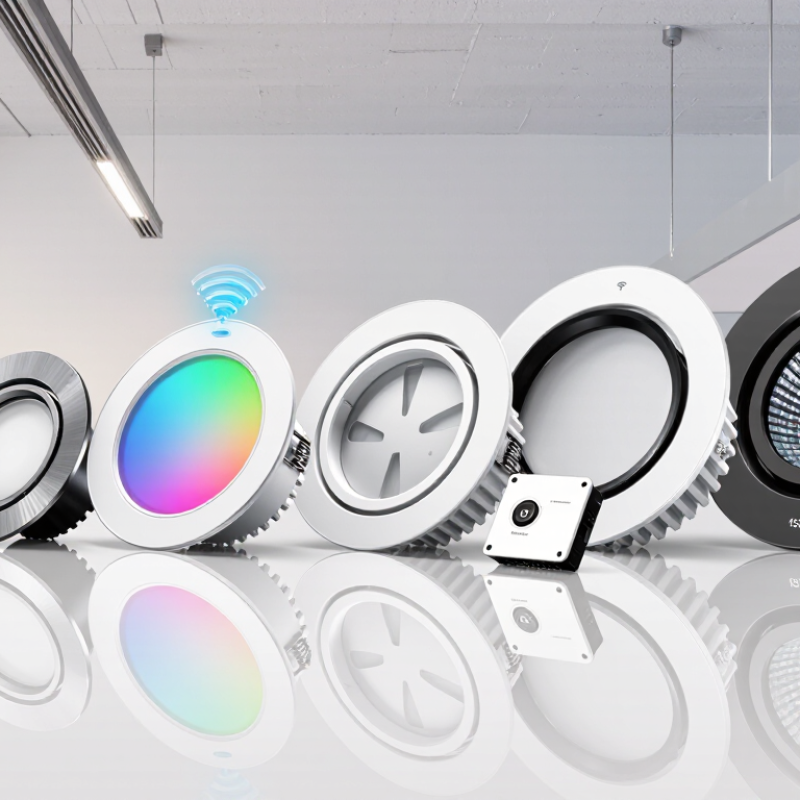
This guide examines the leading Smart Downlight types for international purchasing teams. It considers Wi-Fi, Bluetooth Mesh, Zigbee, Matter-compatible, tunable white, and color-adjustable models. Each type offers different benefits for commissioning, energy management, and user control. For example, a Matter-compatible downlight may simplify multi-brand integration, while a Zigbee model can support stable large-scale networks with suitable gateways. However, compatibility claims should be verified carefully. Marketing language is not always equal to tested performance.

Real-world selection also depends on beam angle, cut-out size, glare control, dimming quality, heat dissipation, and driver replacement. A 90-millimeter fixture may suit a compact ceiling, but it cannot replace a 150-millimeter model without remodeling. Small details matter. Buyers should request photometric data, safety certifications, sample testing, warranty terms, and documented app or protocol support before placing volume orders. Regional voltage, frequency, ceiling structure, and installer expertise also influence the final result.

No single Smart Downlight fits every market. That is the uncomfortable part. A technically advanced product may be too complex for local users, while a simpler model may deliver better project value. The following overview compares the most practical types and highlights where each one performs well, where risks remain, and what global buyers should question before approval.
2026 Top Smart Downlight Types for Global Buyers?

Smart Downlight Basics and Core Features

Smart downlights combine LED lighting, electronic controls, and network access in one compact ceiling fixture. Their basic structure includes a recessed body, diffuser, driver, and adjustable light source. The driver converts incoming power and controls heat. Heat matters. Poor ventilation can shorten LED life and cause unstable dimming. Ceiling depth, cutout diameter, and insulation contact must match the fixture design. Global buyers should verify voltage range, frequency, and local safety certification before ordering.

Core features usually include dimming, tunable white, color rendering, scheduling, and remote control. Dimming changes brightness, while tunable white shifts from warm evening light to cooler task lighting. A high color rendering index helps wood, food, and skin appear more natural. Wireless control may use Wi-Fi, Bluetooth, Zigbee, or another compatible system. These options are not interchangeable. Check gateway requirements, app support, security updates, and offline behavior. Simple controls can be more reliable.

For kitchens and work areas, glare control and beam angle deserve practical testing. A narrow beam highlights surfaces, while a wider beam softens shadows. Bathroom installations need suitable moisture protection, but a high rating does not replace correct sealing. Buyers should request photometric data, driver specifications, warranty terms, and replacement procedures. Smart is not always better. Extra scenes can distract users, and voice control may fail in noisy rooms. I would compare measured performance, installation support, and long-term parts access before choosing a model.

Main Smart Downlight Types Available in 2026

Main Smart Downlight Types Available in 2026

Smart downlights now serve homes, hotels, offices, and retail spaces. The main types include Wi-Fi, Bluetooth Mesh, Zigbee, Thread, and wired DALI models. Wi-Fi versions suit smaller projects because they need no separate hub. Bluetooth Mesh works better across several rooms. Zigbee and Thread downlights usually provide stronger local control and lower network congestion. Wired DALI remains practical for large commercial installations requiring precise dimming and maintenance records.

Light functions also divide the market. Dimmable white downlights support basic brightness control. Tunable-white models adjust from warm evening light to cooler task lighting. RGBW versions add decorative colors, but they often deliver weaker white-light quality. Occupancy-sensing downlights can reduce unnecessary operation. The International Energy Agency reports that lighting uses about 15% of global electricity, making efficient controls commercially important. However, connectivity alone does not guarantee savings.

Tips: Check beam angle, cut-out size, color-rendering index, standby power, and local voltage before ordering. Test the control protocol with your existing gateway. Matter compatibility may improve cross-platform flexibility, but installation results can still vary. In my experience, poor ceiling depth causes more trouble than software. I would not choose RGBW for detailed retail work without checking its white-light performance. Also, confirm replacement access, warranty terms, and cybersecurity documentation. A low price can hide weaker drivers, unstable dimming, or limited technical support.

Comparison of Smart Downlight Technologies and Controls

For 2026, global buyers should compare smart downlights by control architecture, not appearance alone. Fixed white LED downlights suit corridors and retail spaces. Tunable-white models support warmer evening scenes and cooler task lighting. Color-changing units offer visual effects, but they may deliver less practical value. The International Energy Agency estimates that lighting uses about 15% of global electricity. The U.S. Department of Energy reports that LEDs use at least 75% less energy than incandescent lighting.

Wireless control differs significantly. Wi-Fi downlights are convenient for small installations, but network dependence can create failures. Bluetooth Mesh supports local group control and works well in apartments or hotels. Zigbee and Thread can improve multi-room reliability, although gateway compatibility requires careful checking. Matter may simplify cross-platform control, but device support remains uneven in real projects. Wired DALI-2 or 0–10V systems remain stronger choices for offices, schools, and large commercial buildings. They provide stable dimming, scene management, and easier commissioning. However, wiring costs can be higher.

Tips: Ask for measured standby power, dimming performance, flicker data, and emergency behavior. Test ten fixtures together before ordering hundreds. Confirm occupancy and daylight sensors in the actual ceiling. A smart downlight is not automatically intelligent. I have seen attractive systems fail because controls were selected after the fixtures. The weak point is often integration, not illumination. Check the manufacturer’s technical report, warranty terms, and firmware policy before approval. (Sources: International Energy Agency, Lighting; U.S. Department of Energy, LED Lighting.)

Selection Criteria for Global Buyers

2026 Top Smart Downlight Types for Global Buyers?

Global buyers should select smart downlights by project conditions, not attractive app features. IEA reports that lighting uses about 15% of global electricity, making efficiency a practical purchasing criterion. Compare delivered lumens, not wattage alone. A 900-lumen downlight may suit a hallway, but a kitchen usually needs better beam control and lower glare. Check colour rendering too. CRI 90 or higher helps food, fabrics, and skin tones appear natural. For offices, retail spaces, and homes, adjustable white models offer useful control from warm evening light to cooler task lighting.

Compatibility deserves careful testing. Verify the local voltage, frequency, dimming method, junction-box depth, and ceiling insulation rating. A downlight designed for 120V may fail on a 230V circuit. That sounds obvious. It is still often missed.

For connected systems, examine Matter, Zigbee, Bluetooth Mesh, or Wi-Fi support, then confirm gateway requirements and offline operation. IEC 60598 safety requirements and regional electromagnetic-compatibility rules should guide documentation reviews. Ask for test reports, photometric files, warranty terms, and replacement procedures.

Thermal performance is another selection filter. The U.S. Department of Energy’s solid-state lighting reports continue to identify efficacy above 200 lumens per watt as a development benchmark, but real fixtures perform below laboratory values. Insist on tested output at operating temperature. Check flicker, power factor, surge protection, and colour consistency. My own purchasing lesson is simple: the brightest sample is not always the best installation. A quiet driver, stable dimming, and accessible service support often matter more after the ceiling is closed.

Installation, Compatibility, and Market Considerations

2026 Top Smart Downlight Types for Global Buyers?

Smart downlights now fall into several practical categories: Wi-Fi, Bluetooth Mesh, Zigbee, and Thread-enabled models. Wi-Fi units suit small apartments with stable routers. Bluetooth Mesh works better across rooms without depending on cloud access. Zigbee and Thread options can reduce network congestion in larger homes. Compatibility matters more than feature lists.

Installation begins with the ceiling cutout, not the mobile app. A 75 mm fitting will not safely replace a 90 mm opening without proper adaptation. Buyers should check input voltage, driver location, insulation clearance, and dimmer compatibility. Some downlights require neutral wiring. Older properties may lack it.

An electrician should verify circuit loading and grounding before installation. Heat buildup is easy to overlook. It can shorten LED and driver life.

Market conditions also change the best choice. Export buyers need regional voltage versions, local certifications, and clear warranty procedures. Hospitality projects may prefer centralized control and offline operation. Residential buyers often value simple pairing and voice control. App language and data handling deserve attention too. A low price can hide replacement delays or costly gateways. Real installation feedback is useful, but it is not perfect. One test apartment cannot represent every ceiling, climate, or wiring standard. Procurement teams should request samples and test them under actual conditions before placing large orders.