10 Best Plastic Bags for Global Buyers

Choosing the right plastic bags for international sourcing requires more than comparing prices or thickness. Buyers must examine material quality, load capacity, sealing performance, storage conditions, and end-of-life options. A bag that performs well in a dry warehouse may fail in humid sea freight. Fit matters.

The OECD’s Global Plastics Outlook reports that global plastic production reached 460 million tonnes in 2019, while only 9% of plastic waste was ultimately recycled. The report also highlights the rapid growth of plastic waste and the pressure placed on collection systems. UNEP estimates that more than 430 million tonnes of plastic are produced annually, with about two-thirds used briefly before becoming waste. These figures make responsible product selection essential, not cosmetic.

This guide reviews 10 plastic bags for global buyers, including shopping bags, courier mailers, freezer bags, garment bags, and industrial sacks. Each option should be judged by its intended use, dimensions, resin type, closure design, and verified supplier documentation. Recycled content may reduce demand for virgin material, but it can also affect clarity, strength, and consistency. Compostable bags are not automatically suitable for home composting or every local waste system. That point is often misunderstood.

The ranking draws on practical packaging considerations and publicly available industry evidence, including OECD and UNEP research. It also recognizes a limitation: supplier claims are not equally reliable across markets. Buyers should request samples, test them under real conditions, and confirm specifications before placing large orders. No single bag suits every application. A careful choice protects products, budgets, and supply-chain credibility.
10 Best Plastic Bags for Global Buyers

Plastic Bag Types for Different Global Packaging Needs

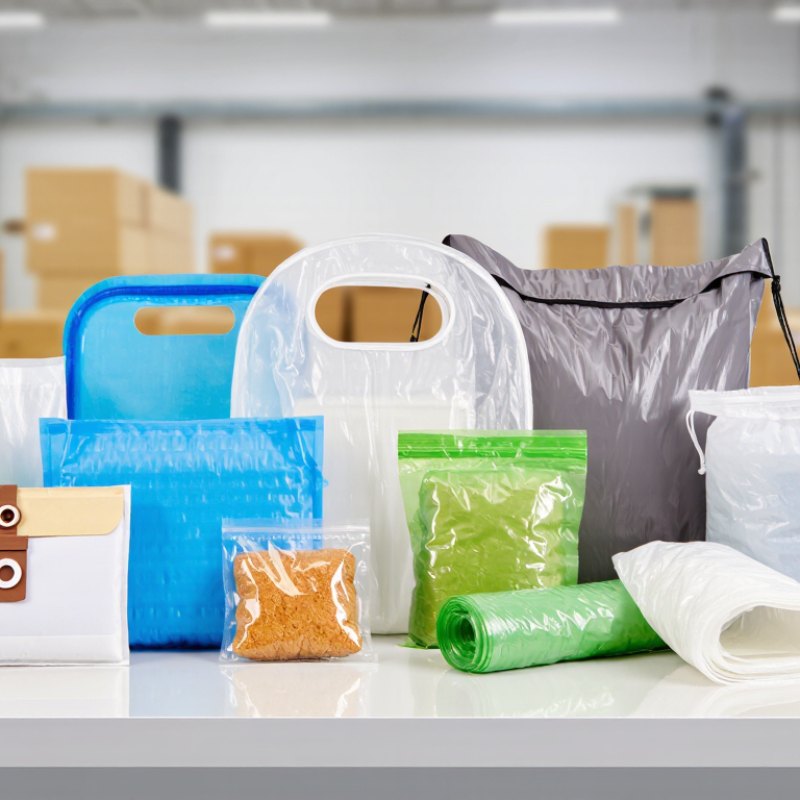
Global packaging projects rarely need one plastic bag type. The best choice depends on product weight, moisture, handling, temperature, and local recycling systems. In packaging trials, I have seen thin film fail at a sharp corner, despite good laboratory strength. Small details matter. Flat bags suit documents, clothing, and small components. Gusseted bags create extra space for bulky products. LDPE bags flex around irregular edges, while HDPE bags offer a crisper feel and useful puncture resistance. PP bags provide clarity and stiffness for visible products.

Zip bags support repeated opening, and slider bags are easier for frequent access. Courier bags add a tamper-evident closure for ordinary commercial shipments. Vacuum bags reduce air around suitable food or textile products, but sealing quality must be tested. Certified compostable bags may fit specific waste systems, though acceptance differs widely between regions. Recycled-content bags can lower virgin plastic use when stable supply and required performance are available.

I would not select a bag from appearance alone. A glossy surface does not prove durability. Check seal strength, drop performance, odor transfer, and thickness consistency. For humid routes, test cartons after condensation exposure. For cold transport, test flexibility below the expected temperature. Clear labeling can support sorting, but local rules still control disposal. One mistake is assuming a material accepted in one country will be accepted elsewhere. Ask converters for technical data, food-contact documentation when relevant, and samples from the intended production batch. Small trial orders reveal problems earlier.

Key Materials, Strength Levels, and Functional Features

10 Best Plastic Bags for Global Buyers

Material determines how a bag behaves. Low-density polyethylene offers flexibility for produce and garment bags, while high-density polyethylene feels crisp and resists tearing. Linear low-density polyethylene usually provides better puncture resistance. Polypropylene suits clear packaging and stronger seams. Recycled content can reduce virgin resin demand, but quality varies between suppliers.

The OECD’s Global Plastics Outlook reports that only 9% of plastic waste was recycled globally in 2019. That figure deserves attention.

For purchasing teams, the ten strongest options include heavy-duty shipping sacks, stretch bags, zipper pouches, retail carrier bags, freezer bags, produce bags, garment bags, refuse sacks, courier mailers, and industrial liner bags. Select strength by application, not appearance. A 50-micron bag may fail under sharp cartons, while a 90-micron structure could perform reliably.

Test tear and puncture resistance using recognized methods, including ASTM D1922 and ASTM D1709. Seal strength matters too. Weak seals waste material and time.

Functional features can change practical value. Moisture barriers protect powdery goods, while opacity improves privacy and light protection. Reusable handles help workers carry uneven loads. Clear film supports quick inspection.

The UNEP report Turning off the Tap states that plastic pollution could be reduced by 80% by 2040 through reuse, recycling, and better design.

Still, no bag is perfect. Compostable claims require careful certification, local processing access, and realistic end-of-life planning. A supplier’s test report should show resin type, thickness tolerance, load results, and batch traceability. Claims without data are not enough.

Top Plastic Bag Options for Retail, Industrial, and Food Use

Global buyers need plastic bags matched to real working conditions, not attractive samples alone. For retail, useful options include lightweight shopping bags, die-cut handle bags, loop-handle bags, and reusable HDPE bags. Each supports different loads, shelf displays, and customer handling habits. Thicker film usually improves strength, but it can raise shipping costs and material use.

For industrial applications, gusseted bags, pallet liners, heavy-duty sacks, and flat poly bags handle bulky products, dust, and irregular shapes.

Food businesses may prefer produce bags, freezer bags, zipper bags, or clear food-contact liners. Ask suppliers for film specifications, sealing temperature, odor performance, and food-contact documentation.

For international orders, verify dimensions, tolerance, printing requirements, and destination-market packaging rules. I have found that small measurement errors can cause large packing problems. No bag is perfect.

Tips:

Test samples with the actual product. Measure filled bags. Check seals after storage and transport. Request batch records and inspection photos before shipment. Do not judge quality by thickness alone; resin type, construction, and sealing often matter more. A transparent bag may look simple, yet poor clarity or weak seams can reduce customer confidence. Cost comparisons should include breakage, rejected goods, storage space, and freight weight. Reconsider the cheapest option when it creates repeated waste.

Sustainability, Compliance, and Import Requirements

10 Best Plastic Bags for Global Buyers

Sustainability, Compliance, and Import Requirements

The best plastic bags are not chosen by price alone. Global buyers should compare material, thickness, load capacity, recyclability, and destination rules. The OECD Global Plastics Outlook reports that only 9% of plastic waste was recycled worldwide in 2019. This makes clear material design and end-of-life planning essential.

For imports, request a full technical file before ordering. It should include resin details, dimensions, tensile-strength results, migration tests for food contact, and recycled-content evidence. Check labeling, packaging marks, customs documents, and extended producer responsibility duties. EU buyers should also review Regulation (EU) 2025/40, which tightens packaging sustainability and waste requirements. Other markets may restrict certain single-use formats or require local registration. Rules differ sharply.

Tips: Ask for third-party test reports, not only factory declarations. Confirm the correct HS code with a customs broker. Test samples under real warehouse conditions. A bag that survives a laboratory test may fail in rain or cold storage. Also, do not trust the word “biodegradable” without disposal instructions and recognized certification. UNEP’s 2023 report supports reducing unnecessary plastic use, but replacement materials can create new impacts. This is an uncomfortable point. A thinner bag may save material, yet tear sooner and increase waste. Experienced buyers should compare total use, not just unit weight.

10 Best Plastic Bags for Global Buyers - Sustainability, Compliance, and Import Requirements

Rank Bag Type and Main Material Typical Thickness or Format Sustainability Profile Relevant Standards and Tests Import and Compliance Requirements Best Global-Buyer Applications
1 Reusable LDPE/LLDPE Carrier Bag
Low-density or linear low-density polyethylene
Approximately 50–120 microns; die-cut or handled format Durable and suitable for repeated use. Can enter polyethylene recycling streams where collection and sorting systems accept flexible films. Recycled content can reduce virgin resin demand. ISO 527 tensile testing; ISO 6383 tear resistance; applicable packaging material identification requirements Check destination-country rules for lightweight carrier bags, minimum thickness, recycled content, taxes, labeling, and extended producer responsibility obligations. Retail shopping, apparel, household goods, promotional distribution, and reusable checkout packaging
2 HDPE T-Shirt Carrier Bag
High-density polyethylene
Approximately 8–35 microns; lightweight gusseted format Uses relatively little material and is technically recyclable as polyethylene film, but actual recycling depends on local collection infrastructure. Not designed for long-term repeated use. ISO 527 tensile strength; seam and handle load testing; applicable food-contact testing when used for food products Many markets restrict or tax lightweight single-use carrier bags. Confirm permitted thickness, warning statements, bag charges, and recycling symbols before shipment. Short-term retail carrying, produce counters, takeaway goods, and general merchandising
3 Post-Consumer Recycled PE Mailing Bag
Recycled LDPE, LLDPE, or HDPE blend
Approximately 50–100 microns; self-seal or tamper-evident format Can lower virgin plastic use when recycled content is verified. Recyclability is strongest when the bag is made from compatible polyethylene and avoids non-removable labels or mixed-material components. Recycled-content chain-of-custody documentation; ISO 527; seal strength and puncture testing Request recycled-content percentage, source documentation, declarations of conformity, ink and adhesive information, and destination-market packaging registration details. E-commerce shipping, apparel fulfillment, document dispatch, and non-food logistics
4 PE Pallet Cover and Industrial Liner
LDPE or LLDPE film
Approximately 80–250 microns; flat, gusseted, or custom liner format Provides high material efficiency for protecting large loads and can be recycled as polyethylene film when clean and separately collected. Contamination may prevent recycling. ISO 527 tensile testing; puncture, impact, and tear resistance; load and environmental stress-cracking tests Confirm customs classification, recycled-content claims, chemical declarations, and any requirements for packaging waste reporting or industrial packaging take-back. Pallet protection, agricultural products, chemicals packaging, machinery parts, and warehouse logistics
5 Food-Grade PE Produce Bag
LDPE or HDPE suitable for food contact
Approximately 10–35 microns; roll-mounted or open-mouth format Lightweight and recyclable in suitable polyethylene-film systems. Food contamination and moisture can reduce recovery rates. Food-contact migration testing; overall and specific migration limits; odor, seal, and tensile testing Food-contact compliance differs by market. Prepare a declaration of compliance, composition information, migration test reports, and traceability records. Fresh produce, bakery items, dry foods, food-service portions, and supermarket packaging
6 PP Woven Sack
Woven polypropylene with optional liner
Typically 50–120 g/m² fabric; stitched or heat-cut construction High strength-to-weight ratio and reusable for many applications. Recycling is possible where polypropylene collection and reprocessing facilities are available. ISO 21898 lifting and packaging performance where applicable; tensile, seam, drop, and top-lift testing For food, agricultural, or chemical goods, verify liner material, migration limits, dangerous-goods rules, labeling, and transport safety documentation. Grain, animal feed, fertilizer, minerals, construction materials, and bulk industrial products
7 Reusable PP Nonwoven Bag
Spunbond polypropylene
Approximately 60–120 g/m²; stitched or ultrasonic-welded handles Designed for repeated use and washable in many configurations. It is usually recyclable as polypropylene if accessories and mixed materials are removed. Handle load, seam strength, abrasion, colorfastness, and dimensional stability testing Check country-specific definitions of reusable bags, minimum durability requirements, labeling, chemical restrictions, and rules governing printed inks. Retail reuse programs, conferences, libraries, pharmacies, and general promotional distribution
8 Certified Compostable Bag
Biodegradable polyester and/or starch-based blend
Approximately 15–50 microns; liner, caddy, or produce-bag format Suitable only for controlled composting conditions when certified accordingly. It should not be presented as recyclable with conventional PE bags or as biodegradable in all environments. EN 13432, ASTM D6400, ISO 17088, disintegration, biodegradation, ecotoxicity, and heavy-metal testing Use recognized certification and accurate disposal instructions. Confirm local acceptance by organic-waste facilities and restrictions on “biodegradable” or “compostable” claims. Food-waste collection, organic-waste caddies, certified composting systems, and selected produce applications
9 Multilayer Barrier Pouch
PE, PP, PET, EVOH, aluminum, or paper combinations
Approximately 60–180 microns; stand-up, flat, or spouted pouch Can reduce product waste through strong oxygen, moisture, or light protection, but mixed-material construction often makes mechanical recycling difficult. Mono-material designs are generally more recycling-compatible. Oxygen and water-vapor transmission; seal integrity; migration testing; retort or sterilization testing where relevant Declare all layers, adhesives, inks, and additives. Verify food-contact status, packaging recyclability criteria, labeling, and producer-responsibility obligations in the destination market. Coffee, snacks, pet food, sauces, detergents, medical products, and moisture-sensitive goods
10 Anti-Static or ESD PE Bag
Polyethylene with controlled static-dissipative additives
Approximately 50–100 microns; zip, open-end, or heat-sealable format Reusable for clean handling when properly designed. Additives, coatings, labels, and contamination may complicate recycling; performance should not be sacrificed for unsupported environmental claims. IEC 61340-5-1; IEC 61340-2-3 surface-resistance methods; seal, puncture, and material compatibility testing Provide ESD test reports, technical data sheets, chemical declarations, and accurate handling instructions. Confirm whether the end product is subject to electronics, hazardous-goods, or cleanroom requirements. Electronic components, circuit boards, sensors, precision parts, and static-sensitive industrial goods
Buyer verification note: Import requirements vary by destination country and end use. Before placing an order, verify tariff classification, packaging taxes, extended producer responsibility registration, recycled-content claims, food-contact status, chemical restrictions, labeling language, and the availability of suitable recycling or composting infrastructure.

How Global Buyers Can Compare Suppliers and Total Costs

10 Best Plastic Bags for Global Buyers

Global buyers should compare plastic bags by use, not appearance alone. The ten most practical options include produce bags, shopping bags, refuse bags, courier bags, freezer bags, vacuum bags, zip bags, stand-up pouches, industrial liners, and bread bags. Each type needs different film, thickness, sealing strength, and printing quality. A thin bag may look economical, but it can fail during loading or humid transport.

Request samples from at least three suppliers. Check microns with a gauge, test the seals by hand, and load each sample with its expected weight. Ask for resin specifications, recycled content details, test reports, and production photographs. Supplier experience matters, but documented quality control matters more. Confirm minimum order quantity, tooling fees, carton dimensions, and lead time. A low unit price can hide expensive defects.

Compare the complete landed cost. Include product price, inner packing, ocean or air freight, insurance, customs duties, taxes, and warehouse handling. Request quotes under the same trade terms, such as FOB or CIF. Calculate the cost per usable bag, not per carton. One supplier may offer cheaper bags but higher waste. I once ignored carton volume and paid more for storage than expected. That mistake changed my buying checklist. Still, forecasts can be wrong. Keep a small buffer for delays, material changes, and seasonal freight increases. Reliable suppliers explain these risks clearly and provide corrective action records.

This comparison uses typical commercial specifications for widely traded plastic bag formats. Film thickness is a practical indicator of durability and material use, while recycled-content figures represent commonly available ranges and should be verified through supplier documentation, test reports, and applicable import regulations.