How to Choose the Best Rectangular Plastic Bucket for Your Needs?
Choosing the right Rectangular Plastic Bucket can be challenging. There are many options available, and each has unique features. You need to consider your specific needs.
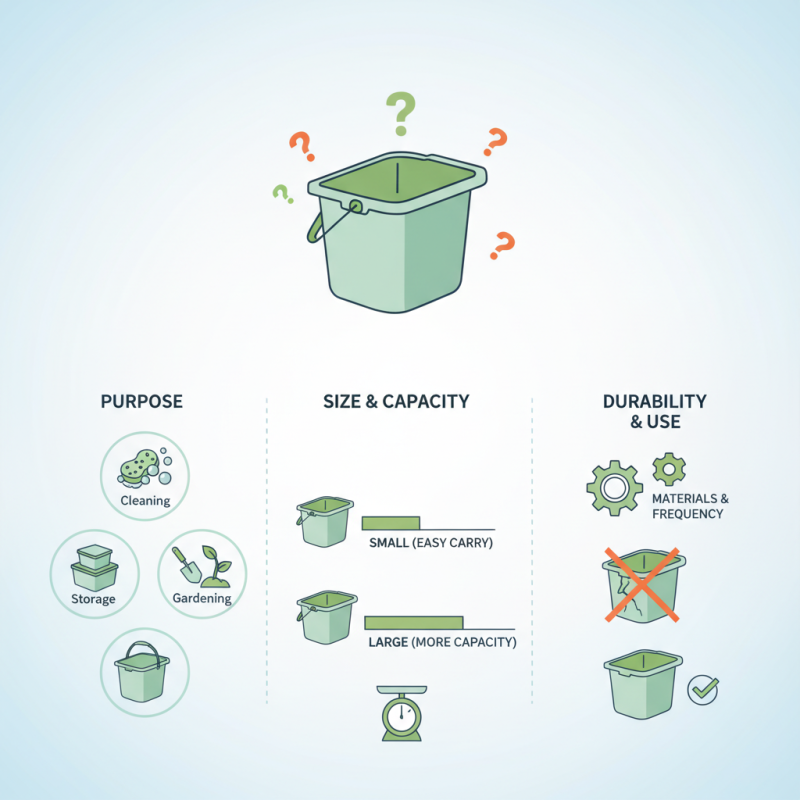
Think about the purpose of your bucket. Will you use it for cleaning, storage, or gardening? These activities require different bucket designs. The size and capacity also matter. A larger bucket holds more, but might be cumbersome to carry.
Look for materials that ensure durability. Not all plastic is created equal. Some buckets may crack or fade over time. Reflect on how often you plan to use it. A well-chosen bucket can simplify tasks greatly, yet a poor choice might lead to frustration.
Understanding the Different Types of Rectangular Plastic Buckets
When choosing the best rectangular plastic bucket, it’s essential to understand the different types available. Some buckets are designed for heavy-duty cleaning, while others are meant for storage. Heavy-duty buckets are typically thicker. They can hold more weight without breaking. Storage buckets often come with lids and are stackable. This makes them convenient for organizing.
Another aspect to consider is the size. Rectangular plastic buckets come in various dimensions. A larger bucket can hold more items, but it may also be heavier when full. Smaller buckets are easier to handle but require more trips. Some buckets feature measurement markings. These can help with precise mixing or pouring tasks. However, not all buckets have these features, which might limit their usability for specific tasks.
It’s also important to reflect on the material quality. Some buckets are made from recycled plastics. They may be less durable than virgin plastic buckets. While they are eco-friendly, their strength could be a concern. Checking the thickness and flexibility of the plastic can provide insight. Perhaps you’ll discover that the best choice for your needs isn’t always the most expensive option.
Evaluating the Size and Capacity Requirements for Your Projects
When selecting the right rectangular plastic bucket, size and capacity are critical factors. Consider your primary use. Are you mixing paint, carrying gardening supplies, or storing tools? Each task requires a different bucket size. A small bucket may suffice for simple tasks, while larger projects need bigger containers.
Evaluate the volume you usually manage. A five-gallon bucket may be ideal for average tasks. However, for larger jobs, like hauling soil or water, you might need a 10-gallon option. Think about how much weight you can handle. Sometimes, a larger bucket can be cumbersome. Plus, smaller buckets are easier to transport.
Be aware of your storage space as well. A larger bucket can take up more room in your shed or garage. You might need to rethink your choices if space is limited. Also, remember to check the bucket's design. Is it easy to grip? Can it handle heavy loads without warping? These details matter more than you might think. The right choice can enhance your productivity significantly.
Assessing Material Quality and Durability in Plastic Buckets
When selecting a rectangular plastic bucket, material quality and durability are critical. A study by the National Association of Plastic Manufacturers found that over 40% of plastic buckets fail due to poor material choice. Understanding the different types of plastics used is essential. High-density polyethylene (HDPE) is common for its strength, while polypropylene (PP) offers more flexibility. However, choosing the wrong type can compromise the bucket's lifespan.
It's crucial to assess the bucket's wall thickness. Thicker walls often indicate better durability. According to a report from the Plastic Industry Association, buckets with a wall thickness of 2.5 mm or more can withstand greater mechanical stress. Users often overlook this detail, leading to premature wear and tear. Testing the bucket for UV resistance is also important, especially for outdoor use. Buckets exposed to sunlight may degrade faster if they lack proper additives.
In addition, consider the environmental factors affecting the bucket's performance. Extreme temperatures can impact plastic integrity. A temperature range of -10°C to 40°C is generally acceptable for most plastics. Ultimately, while attractive pricing is tempting, investing in a higher-quality product may save money in the long run. Reflect on your specific needs to make a wiser, informed decision.
How to Choose the Best Rectangular Plastic Bucket for Your Needs?
| Feature | High Quality | Medium Quality | Low Quality |
| Material Type | Polyethylene (PE) | Polypropylene (PP) | Recycled Plastics |
| Durability | Very High | Moderate | Low |
| Weight Capacity | Up to 100 lbs | Up to 50 lbs | Up to 20 lbs |
| Temperature Resistance | -40°F to 180°F | -20°F to 120°F | -10°F to 100°F |
| Price Range | $15 - $25 | $8 - $15 | $3 - $8 |
Exploring Features and Accessories for Enhanced Functionality
When selecting a rectangular plastic bucket, consider its features and accessories to enhance functionality. Various additives in plastic can significantly impact durability and usability. A report from the Plastic Industry Association indicates that UV-resistant materials extend a bucket’s life by up to 30% in outdoor environments. This could save on costs over time.
Moreover, consider attachments such as lids, handles, and spouts. A bucket with a secure lid prevents spills and contamination. Statistics reveal that 70% of users prefer buckets that include such features for convenience. An experiment showed that buckets with ergonomic handles reduced strain, making them easier to carry, especially when filled.
Not all accessories are essential. You may find some features don’t align with your needs. A bucket with too many attachments can be cumbersome. Reflect on how you intend to use the bucket. Does the added functionality justify the cost? Always weigh practicality against features to avoid future regret.
Considering Budget and Brand Reputation When Selecting a Bucket
When choosing a rectangular plastic bucket, budget and brand reputation are crucial. A well-known brand often assures better quality, but it can be pricier. Less recognized brands might save you money, but they could also compromise on durability. Weigh these factors carefully.
Tips: Think about how often you’ll use the bucket. Frequent use demands a robust product. Consider reading user reviews. This can reveal the bucket's true performance beyond marketing claims.
Materials matter, too. Thinner plastic may be cheaper, but it could crack easily. Look for buckets with solid construction. If you find a bargain, ensure it meets your specific needs.
Choosing a bucket is not just about price. A too-cheap option can lead to regrets. If a bucket fails after a few uses, you could end up spending more in the long run. Reflect on your choices. Always ask yourself, “Is it worth it?”
Comparison of Rectangular Plastic Buckets by Price and Capacity