Top Eco Friendly Plastic Alternatives for a Sustainable Future?
In recent years, the search for eco friendly plastic alternatives has become more pressing. Plastic pollution harms our planet, affecting wildlife and human health. Traditional plastics take hundreds of years to decompose, suffocating ecosystems.
Fortunately, innovative materials are emerging. Companies are exploring biodegradable options sourced from plants and natural fibers. These eco friendly plastics can reduce waste and lower our carbon footprint. Hemp, for example, offers a strong and sustainable alternative to conventional plastics.
However, transitioning to these new materials is not without challenges. Many eco friendly products still lack durability or efficiency compared to traditional plastics. Consumers often hesitate to adopt these alternatives due to higher costs or limited availability. A collective effort is needed to promote sustainable practices and support research. We must reflect on our consumption habits and the impact they have on the environment.

The Importance of Sustainable Alternatives to Traditional Plastics
The urgency for sustainable alternatives to traditional plastics is more pressing than ever. Every year, millions of tons of plastic end up in oceans, harming marine life. This sobering reality highlights our need for eco-friendly options. Biodegradable materials, such as plant-based plastics, offer promising solutions. They break down more naturally, reducing long-term waste.
Shifting away from conventional plastics poses challenges. Yes, some alternatives are available, but they may not match the durability we expect. For instance, many plant-based products have limitations in temperature resistance and lifespan. Sustainable materials often require different production processes, which can impact costs. Finding harmony between sustainability and practicality is key.
Education is vital in this transition. The more we understand eco-friendly choices, the better we can adapt. It’s essential to question our habits and make conscious decisions. We must rethink our reliance on single-use plastics. Encouraging communities to embrace sustainable materials can help pave the way for a greener future. Making small changes now can lead to a significant impact later.
Types of Eco-Friendly Materials: A Comprehensive Overview
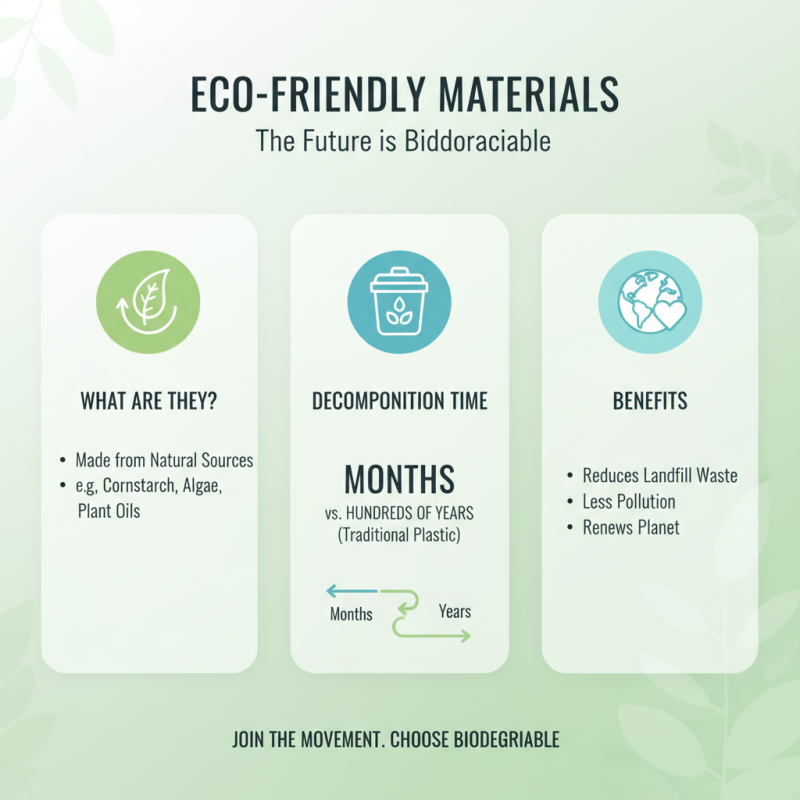
In today’s world, the search for eco-friendly materials is critical. Biodegradable plastics are gaining attention. Made from natural sources, these materials decompose faster than traditional plastics. They can break down in a few months, not hundreds of years. This offers a breath of fresh air.
Another alternative is bamboo. It’s versatile and rapidly renewable. Bamboo can be used for various products, from utensils to textiles. Its growth rate means it can be harvested sustainably. However, we must ensure its harvesting does not harm local ecosystems.
Mushroom-based materials are also emerging. They are made from mycelium, the root structure of mushrooms. This innovative approach aims to reduce plastic waste. However, scaling production while keeping sustainability can pose challenges. The journey toward a sustainable future is filled with possibilities and questions.
Biodegradable Plastics: Understanding Their Role in Sustainability
Biodegradable plastics are gaining attention as a sustainable alternative to traditional plastics. They are designed to break down faster in the environment. Research indicates that under industrial composting conditions, these materials can decompose in as little as 90 days. However, the actual breakdown time can vary widely based on environmental factors. Many people overestimate the ease of disposal. Simply tossing these products into landfill does not guarantee biodegradation.
Industry reports reveal that biodegradable plastics still make up a small portion of the market. Less than 1% of global plastic production is biodegradable. Moreover, consumers often lack awareness about how to properly dispose of these materials. Misunderstanding can lead to contamination in recycling streams, which undermines their benefits. This presents a critical challenge in increasing their adoption.
In addition, while biodegradable plastics are more sustainable than conventional options, they are not without flaws. Some require specific conditions to decompose, and some can release methane, a potent greenhouse gas when they decay anaerobically. There’s a need for greater education and innovation in this field. Sustainable solutions must consider a holistic approach, focusing on reducing overall plastic consumption alongside advancements in biodegradable technology.
Top Eco Friendly Plastic Alternatives for a Sustainable Future
This chart illustrates the consumption of various eco-friendly plastic alternatives over the past five years. The data highlights the growing trend towards sustainable materials in our efforts to reduce plastic pollution.
Innovative Plant-Based Plastics: Benefits and Applications
The rise of plant-based plastics offers exciting possibilities for a greener future. These materials are derived from renewable resources like corn, sugarcane, and bamboo. They provide a sustainable alternative to traditional petroleum-based plastics. By using agricultural waste or natural fibers, these bioplastics reduce carbon emissions and the reliance on fossil fuels.
One major advantage is their biodegradability. Unlike conventional plastics, which can take hundreds of years to decompose, plant-based plastics can break down in months under industrial composting conditions. However, they still require proper disposal methods. Some consumers may not know how to recycle or compost these materials effectively, leading to potential waste mismanagement.
Although innovative, plant-based plastics are not without challenges. Production processes can be resource-intensive, raising concerns about land use and water consumption. This balance is crucial as we aim for sustainability. More public awareness is needed about these materials’ appropriate use and disposal. Moreover, ongoing research is essential to enhance their performance and reduce environmental impact.
Top Eco Friendly Plastic Alternatives for a Sustainable Future
| Material |
Source |
Decomposition Time |
Applications |
Benefits |
| PLA (Polylactic Acid) |
Corn Starch |
3-6 months (industrial composting) |
Food Packaging, Disposable Cutlery |
Biodegradable, Renewable |
| PHA (Polyhydroxyalkanoates) |
Microbial Processes |
1-5 years (soil) |
Medical Devices, Packaging |
Biodegradable, Customizable Properties |
| Starch Blends |
Potato, Corn |
3-5 months (about 90% biodegradable) |
Plastic Bags, Food Containers |
Biocompatible, Low Carbon Footprint |
| Cellulose |
Wood Pulp |
2-4 months (depending on conditions) |
Films, Wraps, Containers |
Fully Biodegradable, Non-Toxic |
| Bagasse |
Sugarcane Fiber |
1-3 months (industrial composting) |
Food Service Items, Plates |
Renewable, Compostable |
Future Trends in Eco-Friendly Plastics: What to Expect
The future of eco-friendly plastics is evolving rapidly. Innovations are on the rise, driven by consumer demand for sustainable products. According to a recent report by MarketsandMarkets, the bio-plastics market is expected to reach $44.9 billion by 2025. This represents a significant growth as industries seek alternatives to conventional plastics.
Key trends include the use of materials like polylactic acid (PLA) and polyhydroxyalkanoates (PHA). These bioplastics are derived from renewable resources and offer a biodegradable solution. However, there are challenges. The production of these materials often requires energy-intensive processes. While they are more sustainable than traditional plastics, the transition is not yet fully efficient.
Another trend is the rise of recyclable plastics made from ocean waste. These plastics can help reduce pollution and promote a circular economy. Yet, not all consumers understand the recycling processes. This creates confusion and can hinder efforts for a greener future. Addressing these gaps in knowledge is crucial for maximizing impact. The push for eco-friendly alternatives is powerful, but it requires collaboration and education across all sectors.