
How to Choose Plastic Take Out Food Containers in 2026

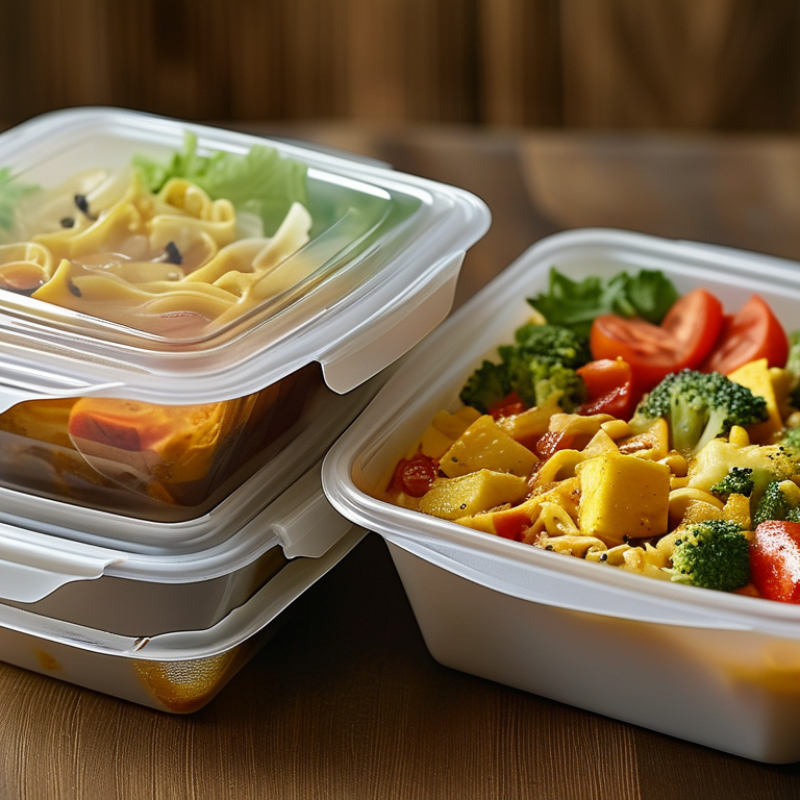
Choosing the right Plastic Take Out Food Container in 2026 requires more than comparing prices. A container may look sturdy, yet soften beside a hot curry or crack during delivery. The better choice begins with the food itself. Consider temperature, moisture, oil content, portion size, stacking pressure, and reheating needs. A clear container can display a fresh salad beautifully. It may perform poorly with steaming noodles.

Dr. Joseph H. Hotchkiss, a respected food-packaging scholar, said, “Packaging is part of the food system, not merely a wrapper.” That principle remains useful for restaurants, caterers, and meal-delivery businesses. The container should protect food quality, prevent leaks, and support safe handling. Check whether the material is approved for its intended food-contact use. Confirm that the lid fits tightly after repeated opening and closing. Small details matter. A weak hinge can ruin a customer’s experience.

Material selection also deserves careful thought. Polypropylene often suits hot meals, while PET can provide strong visibility for chilled foods. These are general guidelines, not universal answers. A supplier’s specification sheet should confirm temperature limits and compatibility. Test containers with real portions, sauces, and delivery times. Laboratory claims can feel convincing, but practical testing often exposes problems.

Sustainability adds another decision. Consider recycled content, reusable designs, end-of-life collection, and actual local recycling access. A “green” label alone proves little. Businesses should balance performance, safety, cost, and waste reduction without chasing perfection. The ideal Plastic Take Out Food Container protects the meal, fits the operation, and creates fewer avoidable compromises.
How to Choose Plastic Take Out Food Containers in 2026

Define the Use Case: Packaging Consumes About 40% of Global Plastic

How to Choose Plastic Take Out Food Containers in 2026

Packaging consumes about 40% of global plastic, according to widely cited industry estimates. That figure makes container selection more than a cost decision. It becomes a waste decision.

Define the use case before choosing a shape, thickness, or resin. A soup container needs heat resistance and a secure lid. A salad box needs visibility, ventilation, and enough space to prevent crushing. A delivery meal needs leak control during movement, not just on a storage shelf.

My experience with food-service packaging shows that small tests reveal major weaknesses. Fill containers with hot food, stack them, and carry them for fifteen minutes. Check warping, spills, lid pressure, and customer handling.

Confirm that the material suits the intended food-contact conditions and local recycling systems. A recyclable container may still become waste if nearby facilities cannot process it. That point is easy to miss.

Tips:

Choose the lightest container that still protects the meal. Avoid oversized boxes that add empty volume and plastic. Test several lid designs with oily and watery foods. Ask suppliers for clear material and safety documentation. Do not assume “reusable” means durable; repeated washing can expose cracks. I have seen well-designed packaging fail because the lid was too flexible. That mistake deserves another review.

Match Resin to Food Type: PP, PET, and HDPE Under FDA 21 CFR Rules

Choosing plastic takeout containers starts with the food, not the lowest unit price. Polypropylene, or PP, suits many hot meals because it handles higher temperatures than several common plastics. It is often practical for soups, rice, noodles, and microwave-ready dishes. Check the exact formulation and intended use under FDA 21 CFR 177.1520.

Polyethylene terephthalate, or PET, offers clarity and good stiffness. It works well for chilled salads, fruit, desserts, and cold beverages. Standard PET should not be treated as automatically suitable for hot filling. Heat-set PET may perform differently, but the supplier must confirm its food-contact conditions under FDA 21 CFR 177.1630. Transparency can look professional, but it does not prove heat resistance.

High-density polyethylene, or HDPE, provides toughness and strong chemical resistance. It fits cold sauces, dairy products, marinades, and other refrigerated foods. FDA compliance depends on the finished container, additives, colorants, and contact conditions. Resin identification alone is not enough. Ask for a food-contact declaration and test results for temperature, acidity, fat content, and storage time. In practical packing checks, lids and seals often fail before the container body. I have seen “microwave safe” assumptions create warped corners and leaking soup. That label needs evidence, not confidence. A small pilot test with the real food is worth the extra day.

Verify Heat Safety: Compare Microwave Claims with EU 10/2011 Limits

How to Choose Plastic Take Out Food Containers in 2026

Verify Heat Safety: Compare Microwave Claims with EU 10/2011 Limits

A microwave symbol is useful, but it is not complete proof of safety. Check the container’s stated temperature range, heating time, and food-contact instructions. “Microwave safe” should describe tested conditions, not unlimited reheating. Heat claims need evidence.

For EU-market containers, review the Declaration of Compliance under Regulation (EU) No 10/2011. This regulation controls plastic food-contact materials through specific migration limits for listed substances. It also uses overall migration testing, commonly limited to 10 mg/dm² under defined conditions. These limits apply to tested food simulants, temperatures, and exposure times. They do not automatically approve every microwave situation.

Ask the supplier for test conditions matching your use. A container holding oily curry may behave differently from one holding soup. Fatty foods can increase migration risks during heating. Repeated heating also deserves attention. The lid may soften before the base does, especially near steam vents. I once treated a general microwave symbol as a full guarantee. That was too casual.

Look for material identification, maximum temperature, and whether single-use heating is allowed. Do not reuse a disposable container merely because it remains intact. “No visible damage” is not a scientific test. Compare the claimed use with compliance documents, not attractive packaging language. When evidence is vague, choose a container with clearer limits and documented testing.

How to Choose Plastic Take Out Food Containers in 2026 – Verify Heat Safety: Compare Microwave Claims with EU 10/2011 Limits
Material Typical Temperature Capability* Microwave Suitability What the Microwave Claim Must Prove EU Regulation (EU) No 10/2011 Considerations Recommended Use
Polypropylene (PP) Approximately −20°C to 120–130°C, depending on grade, wall thickness and design. Conditionally suitable
Commonly used for microwaveable food containers, but the individual article must be tested and labelled accordingly.
Testing should cover the intended food type, heating time, maximum temperature, venting and repeated-use conditions. The lid and container should be assessed as a complete system. Must meet the applicable overall migration limit of 10 mg/dm², or 60 mg/kg food under the regulation’s applicable conditions, plus relevant specific migration limits. Hot meals, soups and reheating applications when a valid microwave-use statement is provided.
Crystallised Polyethylene Terephthalate (CPET) Approximately −40°C to 200–220°C for suitable grades; actual limits vary by formulation and forming process. Conditionally suitable
Often selected for oven or microwave heating when the finished container has been validated for that use.
The claim should specify whether use is microwave-only or also oven-safe, together with maximum temperature, time, preheating restrictions and cooling requirements. Migration testing must reflect the intended high-temperature contact conditions and the relevant food simulants. Compliance cannot be inferred from the resin name alone. Ready meals requiring stronger heat resistance, including some freezer-to-microwave applications.
Polyethylene Terephthalate (PET) Approximately −40°C to 60–70°C for common food-container grades; heat-set versions may differ. Generally not suitable
Do not microwave unless the specific container is expressly tested and labelled for microwave heating.
The label must define the permitted heating conditions. A container’s transparency, rigidity or recycling code is not evidence of microwave safety. Must comply with the applicable overall and specific migration limits. Temperature and contact-time conditions are especially important because PET performance changes with heat. Cold food, chilled drinks and refrigerated takeaway products.
Polystyrene (PS) Approximately 0°C to 70–80°C for standard grades; foamed products may have lower practical limits. Not recommended
Standard PS takeaway containers should not be used in a microwave.
A generic “food safe” statement does not authorize microwave use. Heating can cause deformation and may increase migration under unsuitable conditions. Food-contact compliance under EU 10/2011 does not automatically mean that the article is suitable for microwave heating. Cold or warm—not reheated—foods, subject to the supplier’s temperature instructions.
Expanded Polystyrene (EPS) Typically suitable only for moderate temperatures, commonly below approximately 70°C; limits depend strongly on density and construction. Not suitable
Do not microwave unless a specific, documented test and instruction expressly permit it.
Check for deformation, seal failure and contact with very hot or oily food. Microwave heating should not be assumed for foam packaging. Where the product is a plastic food-contact article, applicable migration limits and declarations of compliance still apply; heat performance is a separate issue. Insulated transport of cold or moderately warm takeaway food.
Polyethylene (PE: HDPE or LDPE) Approximately −40°C to 80–100°C, depending on grade and container design. Usually limited
Some products are suitable for low-temperature warming, but many are not rated for microwave reheating.
The instruction should identify maximum temperature and heating time. Softening, warping and lid failure must be considered. Compliance requires assessment using the intended food simulants and contact conditions. Overall migration compliance alone does not establish microwave suitability. Cold foods, sauces and short-term storage; microwave use only when explicitly validated.
Polycarbonate (PC) Often approximately −30°C to 120°C, depending on grade and repeated-use design. Conditionally suitable
Only use when the finished article is clearly marked for microwave heating.
Verify the declaration of compliance, intended number of uses and maximum heating conditions. Inspect for cracking, clouding or surface damage. Specific migration requirements may apply to substances used in the material. The supplier’s compliance documentation should match the actual article and intended use. Reusable food-service containers where the supplier provides complete use and care instructions.
Important verification points: Under Regulation (EU) No 10/2011, the commonly applicable overall migration limit is 10 mg/dm², with a 60 mg/kg food limit applying in the regulation’s specified circumstances. This is a migration limit, not a universal microwave temperature rating. Before purchasing, request a declaration of compliance, confirm the intended food simulants and time/temperature conditions, and check that the microwave claim applies to the complete container-and-lid system. Always follow the maximum heating time, temperature and venting instructions printed on the product.
*Temperature ranges are typical industry guidance rather than universal limits. Actual performance depends on resin grade, additives, thickness, shape, sealing method, food composition, heating profile and whether the container is single-use or reusable.

Choose Size and Strength: Apply ASTM D4169 Distribution-Test Standards

Choosing plastic takeout containers in 2026 requires more than matching volume to a menu item. A 24-ounce container may hold the meal, yet leave too little headspace for sauces or toppings. Measure the filled food, lid clearance, and stacking height. In practical trials, I have seen containers fail because the lids pressed against one another during transport. The wrong fit also increases material waste and delivery damage.

ASTM D4169 provides a framework for evaluating packaged products under distribution hazards. These hazards can include vibration, compression, shock, drops, and changing temperatures. Select a distribution cycle that reflects your actual route, handling points, and shipping method. A short local delivery needs different evidence than a parcel moving through several warehouses. Test the complete package, including the filled container, lid, seal, and outer carton. Do not test an empty container alone.

Strength is not the same as rigidity. A container can flex slightly and still protect food, while a rigid wall may crack under impact. Check corner deformation, lid retention, leakage, and stack compression after conditioning. Use realistic loads, such as hot rice, soup, or chilled salad. Record results with photographs and measured changes. One honest limitation remains: no laboratory cycle perfectly reproduces every delivery route. Real traffic, careless stacking, and uneven shelves can expose weaknesses that testing misses. Recheck the design when portion sizes, closure pressure, or distribution channels change.

How to Choose Plastic Take Out Food Containers in 2026

Choose the container size according to serving volume and shipping-unit weight, then verify structural strength with the applicable ASTM D4169 distribution-test cycle. ASTM D4169 defines three assurance levels, with Level I representing the highest test severity and Level III the lowest.

Relative severity index: Level I = 3, Level II = 2, and Level III = 1. The index is a visual comparison of ASTM D4169 assurance levels, not a universal wall-thickness or load-rating requirement.

Assess Sustainability: Use ISO 18606 for Recyclable and Compostable Options

Choosing plastic take-out containers in 2026 requires more than checking price, thickness, or appearance. I examine the container’s intended recovery route before placing an order. ISO 18606 is useful when assessing packaging designed for organic recycling, including compostable food-service items. It addresses biodegradation, disintegration, and material safety during controlled composting.

A practical check begins with the supplier’s technical documentation. Ask which ISO 18606 requirements the container meets, and request test reports from a competent laboratory. Look for clear instructions about commercial composting conditions. A container may break down in an industrial facility but remain unchanged in a backyard compost pile. That difference matters.

Recyclable plastic needs separate attention. ISO 18606 does not automatically prove that every plastic container belongs in a local recycling bin. Confirm the resin type, additives, labels, and collection rules in the areas you serve. I also test containers with hot soup, oily noodles, and condensation. Lids can warp. Labels can contaminate sorting streams. Small details matter.

Be cautious with vague claims such as “green” or “eco-safe.” They sound convincing but provide little evidence. I once favored a lighter container, then found its thin lid failed during delivery. That mistake increased waste instead of reducing it. Sustainability involves the full use cycle: production, food contact, transport, collection, and processing. Local facilities may also reject certified-looking packaging. Verify acceptance before switching materials.