
Why Choose Recycled Plastic Furniture for Global Buyers?
Global buyers are rethinking furniture as material costs, waste pressures, and procurement standards change. The OECD’s Global Plastics Outlook (2022) reported that global plastic waste reached 353 million tonnes in 2019. Only 9% was recycled. Much of the remaining waste was landfilled, burned, or leaked into the environment.
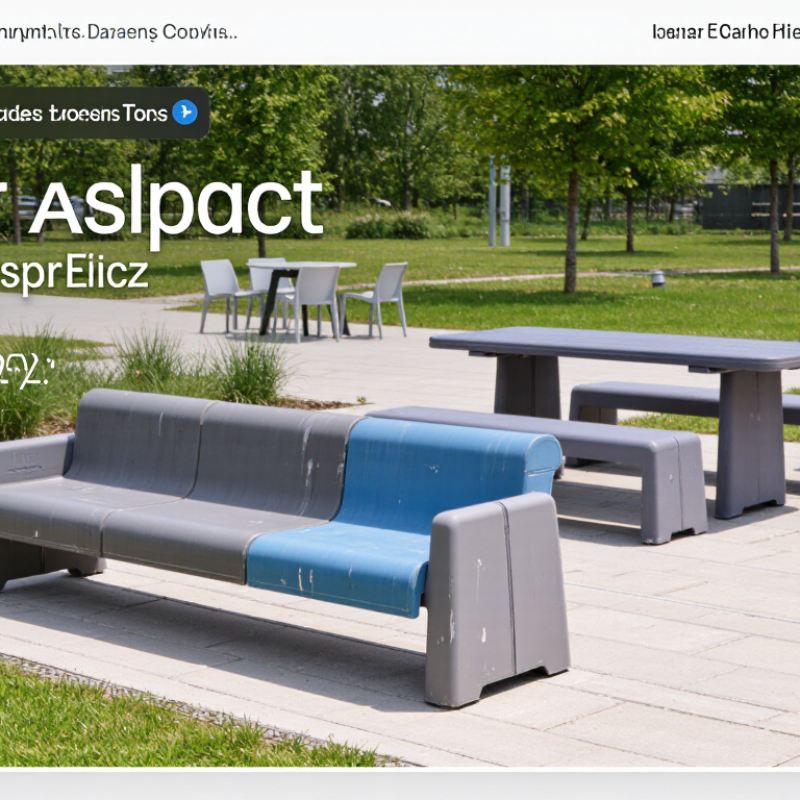
This is where furniture recycled plastic becomes commercially relevant. Recycled high-density polyethylene can transform discarded bottles, packaging, and industrial plastics into benches, tables, chairs, and outdoor storage. A finished park bench may show subtle color variation or small surface marks. These details can indicate recycled content, rather than poor manufacturing. However, appearance alone proves little. Buyers should request recycled-content declarations, material testing, batch records, and information about additives.
The UNEP Global Resources Outlook 2024 warns that global resource extraction could rise by about 60% by 2060 without major changes in production and consumption. Recycled plastic furniture cannot solve that challenge alone. It can reduce dependence on virgin plastic and support longer product lifecycles when designed properly. UV resistance, drainage, fastener quality, load capacity, and repair options matter more than a green label. Standards such as EN 581 and relevant BIFMA requirements can help buyers assess safety and performance, depending on the product and market. Supplier audits remain essential. Certifications can be useful, but they are not magic. A product may contain recycled material while still having weak durability or poor end-of-life planning. The strongest buying decisions combine verified data, practical testing, and honest attention to limitations.
What Is Recycled Plastic Furniture?
Recycled plastic furniture is made from recovered plastic waste rather than newly produced materials. Common inputs include used packaging, containers, and industrial plastic scraps. These materials are sorted, washed, shredded, melted, and pressed into boards or molded parts. The result can become benches, chairs, tables, or outdoor storage.
For global buyers, the material’s consistency matters. Reliable manufacturers should explain the plastic source, production process, and quality controls. Recycled plastic resists moisture, insects, and splintering, making it practical for gardens, schools, parks, and coastal areas. However, it is not automatically sustainable. Mixed plastics may reduce strength or complicate recycling later. Dark colors can also become hot under strong sunlight. A greener label does not replace technical evidence. I have found that samples often reveal details that product descriptions miss, such as rough edges, uneven surfaces, or weak joints.
Tips: Ask for recycled-content documentation and test reports. Check whether the furniture contains post-consumer material. Review UV resistance, load capacity, drainage, and surface temperature. Request a physical sample before placing a large order. Compare packaging volume and shipping weight, too. These details affect both environmental impact and long-term costs. Local climate also deserves attention. A product suited to a cool inland town may perform differently in humid, high-UV conditions.
How Is Recycled Plastic Furniture Manufactured?
Why Choose Recycled Plastic Furniture for Global Buyers?
Recycled plastic furniture begins with carefully collected post-consumer plastic. Materials are sorted by type and color before processing. Workers remove labels, metal pieces, dirt, and unsuitable plastics. The cleaned material is then washed, dried, and shredded into small flakes. Those flakes enter an extruder, where controlled heat turns them into a uniform plastic melt. The material is pressed or molded into boards, legs, panels, and other furniture parts. Cooling fixtures help maintain accurate dimensions.
The process is efficient, but it is not flawless. Recycled feedstock can create slight color changes, surface marks, or texture differences. Experienced manufacturers monitor moisture, temperature, pressure, and cooling time for every production batch. They also inspect dimensions, load performance, fasteners, and surface quality. Reliable suppliers should provide traceability records and relevant test reports. These details help global buyers compare products with greater confidence. Recycled plastic furniture can also reduce dependence on virgin plastic, although environmental benefits depend on sourcing and production practices.
Tips: Ask how the material is collected and sorted. Check whether the product uses recycled plastic throughout, not only in visible panels. Request samples before large orders. Test outdoor pieces for fading, water absorption, and stability. Do not treat a low price as proof of better value. Some details are easy to miss.
What Benefits Does It Offer Global Buyers?
Why Choose Recycled Plastic Furniture for Global Buyers?
Global buyers often need furniture that survives changing weather, long shipping routes, and intensive daily use. Recycled plastic furniture can meet these demands with practical advantages. Manufacturers typically process used plastic into solid boards or molded components. These materials resist moisture, insects, and many common stains. A café chair left outdoors after heavy rain may need only wiping, not repainting.
Maintenance costs can remain predictable. Recycled plastic does not usually require sealing or regular anti-rust treatment. This matters for hotels, schools, parks, and rental properties with limited maintenance teams. Many products also use simple parts, making replacement easier when a leg or fastener becomes damaged. Buyers should still confirm load ratings, UV testing, and material composition before ordering.
Shipping efficiency deserves attention. Some designs can be nested or packed flat, reducing storage space and transport volume. However, recycled plastic furniture is not perfect. Color consistency may vary between production batches, especially when feedstock changes. Dark surfaces can also become hot under direct sunlight. I have seen buyers focus on purchase price and overlook local climate testing. That mistake can create avoidable complaints later.
Reliable sourcing requires clear documentation. Ask for recycled-content records, inspection reports, installation instructions, and realistic warranty terms. Check whether the furniture suits your region’s temperature range and safety requirements. A responsible supplier should answer these questions directly, without hiding behind attractive photographs.
Why Choose Recycled Plastic Furniture for Global Buyers? - What Benefits Does It Offer Global Buyers?
| Buyer Decision Dimension | Relevant Data or Fact | Practical Benefit for Global Buyers | Important Buying Consideration | Reference |
|---|---|---|---|---|
| Waste diversion | Recycled plastic furniture can use post-consumer or post-industrial polymers, including commonly recycled polyethylene and polypropylene. | Supports waste-reduction targets and gives recovered plastic a longer service life as a finished product. | Ask whether the material is post-consumer, post-industrial, or a mixture, and request documentation of the recycled content. | U.S. EPA; ISO 14021 |
| Material durability | High-density polyethylene and polypropylene are thermoplastics with low moisture absorption and good resistance to many common chemicals. | Suitable for many outdoor, hospitality, education, and public-space applications when the design and formulation are appropriate. | Confirm load capacity, UV resistance, temperature range, fastener strength, and the intended indoor or outdoor use. | U.S. EPA; ASTM product-testing standards |
| Moisture and corrosion resistance | Plastic does not rust, and polyethylene and polypropylene generally have low water absorption compared with many wood-based materials. | Reduces concerns related to rain, humidity, splashes, and salt-air exposure in suitable applications. | The entire product still matters: metal hardware, joints, coatings, drainage, and assembly quality can affect service life. | U.S. EPA; manufacturer test reports should be reviewed |
| Maintenance requirements | Non-porous plastic surfaces generally do not require sealing, staining, or anti-rust treatment. | Can reduce routine maintenance labor and the purchase of protective coatings or sealants. | Use the supplier’s cleaning instructions; abrasive cleaners, solvents, and excessive heat may damage the surface. | Material care guidance; product-specific testing recommended |
| Climate and UV performance | Outdoor plastic products may experience color fading, embrittlement, and thermal expansion if they are not stabilized for sunlight and temperature changes. | Buyers can select weather-resistant products for different climates instead of treating all recycled plastic furniture as having identical performance. | Request accelerated weathering results, UV-stabilizer information, and a clearly stated outdoor-use warranty. | ASTM G154; ISO 4892-3 |
| Design and color flexibility | Thermoplastic furniture can be molded into different forms and can incorporate color during processing. | Enables coordinated furniture programs for retail, hospitality, residential, and public projects. | Recycled feedstock may have natural color variation; approve a production sample and tolerance range before ordering. | Supplier specifications; ISO 14021 for environmental claims |
| Shipping and handling | Plastic furniture is not vulnerable to wood-boring insects and does not corrode like unprotected steel, although its shipping weight and packaging depend on the design. | May simplify storage and reduce handling concerns related to moisture, pests, and surface rust. | Compare packed dimensions, container loading quantity, dimensional weight, and packaging recyclability rather than judging logistics by material alone. | Product packaging and logistics specifications |
| End-of-life potential | Many thermoplastic products can technically be mechanically recycled when they are clean, identifiable, and kept in compatible material streams. | Supports circular-design goals and may allow material recovery after the product’s useful life. | Recyclability is not the same as actual collection; verify local recycling infrastructure and avoid inseparable mixed-material construction where possible. | OECD Global Plastics Outlook; Ellen MacArthur Foundation |
| Environmental comparison | Environmental impacts vary according to recycled content, energy source, transport, product lifetime, repairability, and end-of-life treatment. | Allows buyers to evaluate the complete life cycle instead of relying only on the material label. | Request a life-cycle assessment or product carbon-footprint methodology before making quantified environmental claims. | ISO 14040; ISO 14044; ISO 14067 |
| Compliance and documentation | International buyers may need evidence covering chemical safety, structural performance, packaging, labeling, and environmental claims. | Clear documentation can support retailer onboarding, project approvals, customs processes, and sustainability reporting. | Request test reports, declarations, recycled-content evidence, safety data, warranty terms, and destination-market requirements before purchase. | EU REACH; EU General Product Safety Regulation; ISO 14021 |
Which Quality and Safety Standards Should Buyers Check?
Why Choose Recycled Plastic Furniture for Global Buyers?
Which Quality and Safety Standards Should Buyers Check?
Recycled plastic furniture can support circular production, but quality varies between suppliers. Buyers should request clear material specifications, recycled-content evidence, and batch traceability. A stable chair should resist tipping, cracking, and deformation under its intended load. Look for test reports covering strength, durability, weather resistance, and UV exposure. Outdoor products may fade or become brittle without proper formulation. Small details matter.
Safety checks should match the destination market and product category. Ask for independent laboratory testing against relevant furniture standards, chemical restrictions, and flammability requirements. Confirm that coatings, pigments, and additives meet applicable limits. For children’s furniture, inspect sharp edges, pinch points, stability, and accessible small parts. Certificates alone are not enough. Verify their scope, testing date, sample identity, and issuing laboratory.
Tips: Request samples from the actual production batch. Compare color, thickness, surface finish, and odor. Check screw points for splitting and inspect hidden joints. Ask how rejected materials are controlled. A supplier may provide excellent documents, yet production consistency can still vary. I have found that practical inspection often reveals weaknesses paperwork misses. Buyers should also repeat testing after major material or mold changes. Recycled content is valuable, but safety must remain measurable.
How Should Buyers Evaluate Suppliers and Total Costs?
Global buyers are choosing recycled plastic furniture for durability, weather resistance, and lower dependence on virgin materials. Yet the material label alone proves little. The OECD’s Global Plastics Outlook reports that global plastic waste reached 353 million tonnes in 2019, while only 9% was recycled. Buyers should request clear evidence of recycled content, including test reports, batch records, and recognized chain-of-custody certification.
Supplier evaluation should begin with practical checks. Ask for a physical sample, not only digital photographs. Inspect the underside for voids, weak welds, or uneven coloring. Review load testing, UV exposure results, moisture resistance, and dimensional tolerances. A reliable supplier should explain its input sources and manufacturing controls without avoiding difficult questions. Production experience matters. So does independent verification. Some documentation may be incomplete.
Total cost requires more than the factory quotation. Calculate tooling, packaging, ocean freight, insurance, customs charges, warehouse handling, installation, and expected replacement rates. A slightly higher unit price may reduce cracking, color fading, or customer returns. The UNEP Turning off the Tap report states that plastic pollution could be reduced by 80% by 2040 through system-wide changes, including reuse and improved recycling. That target does not make every recycled product sustainable. Buyers should compare service life, repairability, recycled content, and end-of-life options. A low quote can still be wrong. Local climate testing is often overlooked, especially where furniture faces intense sun, salt air, or repeated freezing.
Why Choose Recycled Plastic Furniture for Global Buyers?
How Should Buyers Evaluate Suppliers and Total Costs?
In 2019, only 9% of global plastic waste was recycled, while 50% was disposed of in landfills, 19% was incinerated, and 22% was mismanaged. Buyers can improve circularity by verifying post-consumer recycled content, material traceability, independent test reports, product durability, repairability, freight efficiency, maintenance requirements, and end-of-life recycling options. Total cost should include purchase price, logistics, installation, maintenance, replacement risk, and disposal.
Source: OECD, Global Plastics Outlook, 2022; global plastic waste data for 2019.
Related Posts
-
How to Source Recycled Plastic Furniture in 2026
-
How to Source Sustainable Recycled Plastic for Your Business?
-

Top 10 Benefits of Using Recycled Plastic Bags for Businesses?
-
10 Essential Tips for Choosing Recycled Furniture for Your Home?
-

How to Effectively Recycle from Home in 2025 for a Greener Planet
-

2026 How to Create Beautiful Furniture from Recycled Wood?